

Home / News / Industry News / Restaurant Flooring: A Practical Guide for Dining, Kitchen, and Bar Areas
Content
Walk into any busy restaurant and you can feel the floor before you notice the lighting. A good restaurant floor absorbs the noise of a lunch rush, stays sure underfoot when a server carries a tray, and still looks presentable after another Friday night. We have been making flooring materials for more than three decades, and restaurant projects remain some of the most demanding we see. The floor has to handle grease, dropped cutlery, constant cleaning, and a design brief that often changes from the kitchen to the bar. There is no single best restaurant flooring — only the right combination of surfaces for each zone.
Back-of-house areas are where restaurant flooring earns its keep. Kitchens combine hot oil, water, cleaning chemicals, heavy trolleys, and staff who are moving quickly. A floor that becomes slippery when wet is not just an inconvenience; it is a safety issue. The surface also has to resist staining from food dyes, grease, and acidic ingredients, because a floor that looks tired after six months will not survive a full service life.
For these spaces, the practical shortlist usually includes quarry tile, epoxy-coated concrete, and heavy-duty vinyl or rubber sheet. Quarry tile has a long history in commercial kitchens because it is hard, non-porous, and can be cleaned aggressively. Epoxy systems offer a seamless surface that is easy to mop, but they can be slippery unless a textured aggregate is added. Vinyl and rubber sheet floors have become more common because they are warmer underfoot, quieter, and faster to install. The key is to check the slip resistance rating, the wear layer, and the welding details at seams.
 No.12 Anti-Slip Wear-Resistant Heterogeneous Vinyl FlooringHeterogeneous coiled flooring with wood and marble visuals, a wear-resistant layer, and anti-slip performance for kitchen prep zones and easy-clean commercial interiors.View Product →
We often recommend a heterogeneous vinyl with a reinforced wear layer for kitchen perimeters and prep zones. It gives you the cleanability of a sheet floor with a printed design that hides scuffs, and it can be heat-welded to keep water out of the subfloor.
Once guests leave the kitchen behind, the floor changes jobs. In the dining room, acoustics, comfort, and appearance matter more. Hard surfaces reflect sound, which makes a full room feel louder than it is. That is why many restaurants choose luxury vinyl tile, homogeneous vinyl, rubber, or in some cases carpet tiles for dining zones. Each has a different balance of warmth, noise reduction, and design flexibility.
Bars and waiting areas see a different kind of traffic: standing guests, bar stools that scrape, spilled drinks, and occasional broken glass. A floor with good indentation resistance and a subtle texture tends to hold up better than a high-gloss surface. If the design calls for wood visuals, a wood-grain luxury vinyl tile can deliver the look without the swelling and scratching risks of real hardwood.
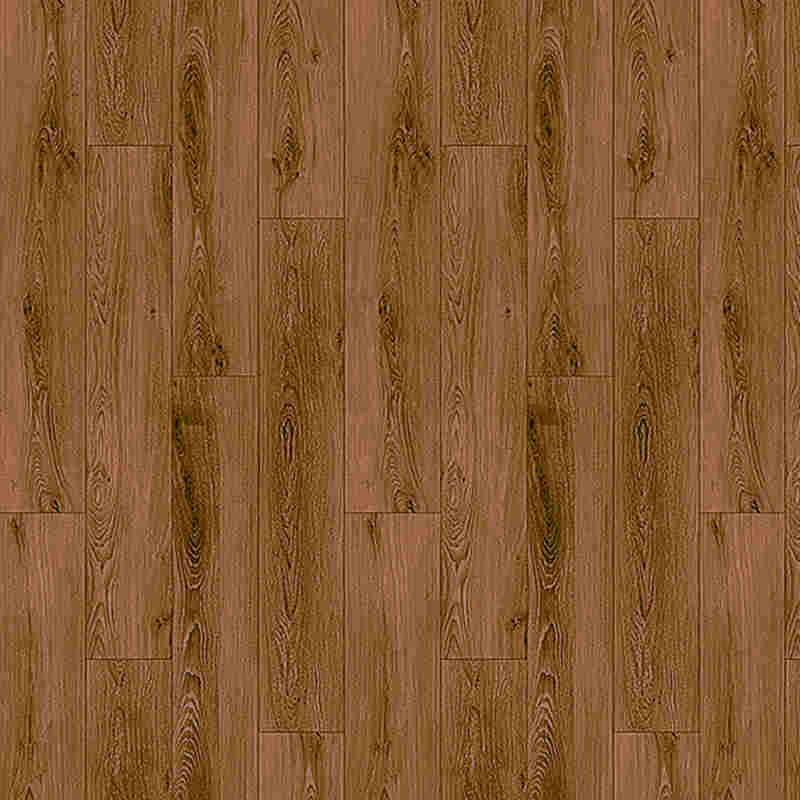 KEYNOTE Wood-Grain Touching Feel Luxury Vinyl TilesWood-grain luxury vinyl tile with tactile feel, durable wear resistance, easy cleaning, sound absorption, and flexible non-directional installation for dining and bar areas.View Product →
For dining rooms that need to feel warm but still clean easily, we have seen strong results with wood-grain LVT that carries a textured surface and a wear layer rated for commercial traffic. It is comfortable underfoot, simple to replace tile by tile, and much quieter than ceramic or stone.
The table below compares the options we see most often in restaurant projects. It is not a ranking. The right choice depends on the zone, the cleaning routine, the subfloor, and the kitchen's style of service.
| Flooring type | Best suited to | Slip resistance | Maintenance | Notes |
|---|---|---|---|---|
| Quarry tile | Commercial kitchens, dishwashing areas | Good when unglazed or textured | Frequent mopping; grout needs attention | Very durable but hard underfoot and loud |
| Epoxy-coated concrete | Back-of-house, prep lines, storage | Variable; add aggregate for wet areas | Seamless and easy to clean | Can crack with substrate movement; professional install needed |
| Heterogeneous vinyl | Kitchens, corridors, service areas | Good with proper R rating | Damp mop and neutral cleaner | Welded seams improve hygiene; wide design range |
| Homogeneous vinyl | Dining rooms, bars, high-traffic halls | Moderate to good depending on finish | Easy to clean; occasional polish | Color runs through the full thickness; very wear resistant |
| Luxury vinyl tile | Dining rooms, bars, waiting areas | Good with textured surface | Simple sweep and damp mop | Realistic wood and stone looks; individual tiles replaceable |
| Rubber sheet or tile | Kitchens, bars, standing areas | Excellent when wet | Regular cleaning; avoid harsh solvents | Quiet and comfortable, but higher material cost |
One practical point: a restaurant often needs more than one floor. The kitchen may need a welded sheet floor, the dining room a decorative LVT, and the bar a rubber tile. Planning transitions and thresholds early prevents awkward strips later.
Our company has been manufacturing flooring and wall decorating materials since the 1990s. Today we operate four production bases and a total factory area of more than 893,000 square meters, with over 1,000 employees. The journey started in Foshan, Guangdong, in 1996; the Shanghai factory was established in 2003, followed by another Foshan plant in 2004 and a Zhejiang base in 2010. Along the way we began exhibiting at international trade fairs such as MosBuild in Russia and BigFive in Dubai, which gave us a close view of how differently restaurants are built in different markets.
According to our own project records, we have supplied commercial flooring materials for a substantial share of the Shanghai World Expo project. That experience taught us that a floor specified for a restaurant kitchen is not the same as a floor for a hotel lobby, even if both are called commercial vinyl. Restaurant flooring has to tolerate frequent wet cleaning, food acids, grease, and the occasional dropped knife. We look at wear layer thickness, dimensional stability, seam quality, and the cleaning chemicals a client actually uses before we recommend a product.
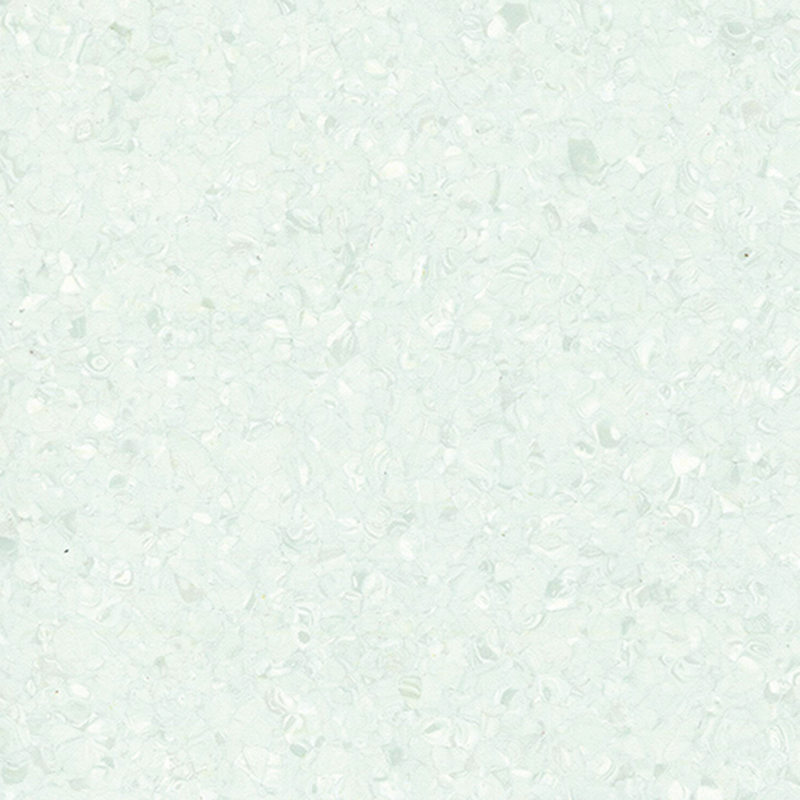
 BULGARIA Scratch and Wear Resistant Homogeneous FlooringHomogeneous flooring with non-directional pattern, PUR and UV-cured surface for scratch, stain, and wear resistance in busy dining and bar areas.View Product →
For dining and bar areas that see constant chair movement and foot traffic, a scratch-and-wear-resistant homogeneous vinyl gives a consistent color through the full thickness. It does not rely on a printed layer, so it keeps its appearance even in the busiest zones.
Restaurant flooring succeeds or fails at the details. In wet areas, heat-welded seams and coved edges stop water from reaching the subfloor. In dining rooms, the subfloor must be flat enough for large-format tile or LVT, or the edges will telegraph through. For fast turnarounds, SPC lock floors and loose-lay vinyl can reduce downtime, but they still need proper acclimation and a clean substrate.
Maintenance is the other half of the equation. Quarry tile and concrete need routine cleaning with the right pH-neutral or degreasing products. Vinyl floors should never be scrubbed with abrasive pads that dull the surface. Rubber floors dislike solvent-based cleaners. If you are comparing cleaning routines and slip ratings in more detail, our restaurant flooring guide walks through zone-by-zone selection. The goal is always the same: a floor that looks good on opening night and still performs two years later.
Over the years, we have seen the same avoidable problems appear in restaurant projects. Most of them come from treating the whole building as one floor rather than a sequence of work zones.
Restaurant flooring is not one decision but a series of them: kitchen, dishwashing, prep, dining, bar, restrooms, and corridors. Each zone has its own safety requirements, cleaning routine, and design language. When those needs are matched to the right material, the floor stops being a maintenance problem and becomes part of the guest experience. If you would like to see how these materials come together in real projects, our commercial case studies show a range of layouts and finishes. We are always glad to talk through the details, because after thirty years in this industry, we still believe the best floor is the one that quietly does its job every single service.



 English
 русский
 عربى
 Español