

Home / News / Industry News / what is the life cycle cost of rubber flooring: Practical Applications, Selection
Content
Most flooring conversations start with a price per square foot, and rubber almost always loses that first round. The number on the quote looks high next to vinyl composition tile, and the decision feels obvious. Then, eight or ten years later, the same facility manager is looking at a maintenance budget, a repair log and a second replacement cycle, and asking a very different question: what did this floor actually cost us?
That is the life cycle cost question, and it is the one worth answering before the purchase order goes out. Life cycle cost is not a sales tool or a theoretical exercise; it is simply every euro, dollar or yuan you will spend on a floor from the moment you specify it to the moment it leaves the building, divided by the years of service you get in return. When you compare floors that way, the ranking often changes completely.
Life cycle cost covers the whole ownership story, not just the delivery of the material. For rubber flooring, that means tracking:
Most buyers carefully track the first three items and ignore the rest. In practice, the rest is where the money is. Studies of flooring costs in schools and commercial buildings repeatedly find that cleaning and maintenance account for the majority of total expenditure over a floor's life, which means a floor that is cheap to buy but expensive to clean is rarely cheap at all.
To get a sense of scale, published industry figures for the United States commonly put installed vinyl composition tile at roughly 1.20 to 1.50 dollars per square foot, linoleum at 3 to 4 dollars, and rubber at 4 to 5.50 dollars. On day one, rubber can look like three times the investment. Over a full service life, that gap is usually not three times anything.
The reason is the shape of the two cost curves. Vinyl composition tile requires a cycle of stripping, sealing and polishing, and each of those steps is mostly labour. Rubber flooring is designed to be cleaned rather than finished - a neutral pH cleaner, a damp mop or an automatic scrubber, and a periodic deeper clean are usually enough. Labour is the most expensive input in any maintenance budget, so a floor that eliminates finish cycles removes a large, recurring line item from your operating cost for the next two decades.
Rather than arguing about price per square foot, calculate cost per square foot per year of service:
(Installed cost + total cleaning + repairs + replacements + disposal + downtime) divided by years of service
If you want to be rigorous, discount future costs to present value using your organisation's rate, since money spent in 2038 is worth less than money spent today. For most facility decisions, an undiscounted version is already accurate enough to separate a good decision from a poor one.
The table below uses mid-range figures for a medium-traffic commercial interior. Cleaning assumes contract labour at a typical commercial rate, repair assumes occasional spot work rather than full replacement, and downtime has been left out to keep the comparison conservative.
| Flooring type | Installed cost | Cleaning and care, 20 years | Repair or replacement, 20 years | 20-year total | Cost per year |
|---|---|---|---|---|---|
| Vinyl composition tile | $1.35 | $6.00 | $2.70 | $10.05 | $0.50 |
| Glue-down LVT | $3.20 | $3.00 | $3.20 | $9.40 | $0.47 |
| Rubber sheet or roll | $5.00 | $2.40 | $0.30 | $7.70 | $0.39 |
| Rubber tile | $5.60 | $2.50 | $0.60 | $8.70 | $0.44 |
Read the last column, not the second. Rubber costs about 3.65 dollars more per square foot on installation day than vinyl composition tile, but roughly 0.11 dollars less per square foot per year across the full period. On 5,000 square feet that difference is around 11,000 dollars over 20 years - and the gap widens in busy buildings, where the stripping cycle runs more often or where care happens at night at premium labour rates.
If you take only one thing from life cycle costing, take this: the way a floor is cleaned matters more than the floor itself. A well-maintained rubber floor with proper entrance matting can hold its appearance for 15 to 25 years. The same floor, cleaned with aggressive alkaline strippers, abrasive pads and too much water, can start to look tired within five.
Practical care is straightforward. Keep 3 to 5 metres of entrance matting at every exterior door so grit is trapped before it acts like sandpaper. Use a neutral cleaner, dose it correctly and rinse well. Reserve heavy scrubbing for the occasional deep clean, and follow a documented routine rather than a reactive one. For a detailed schedule you can adapt to your own building, our practical rubber floor care and maintenance tips cover the day-to-day detail.
Rubber earns its place in the model through several smaller savings that rarely appear on a specification sheet:
A floor that stays serviceable for two decades also avoids two disruptions that never appear on a quote: the cost of moving staff and equipment out of a space, and the productivity that disappears while it happens.
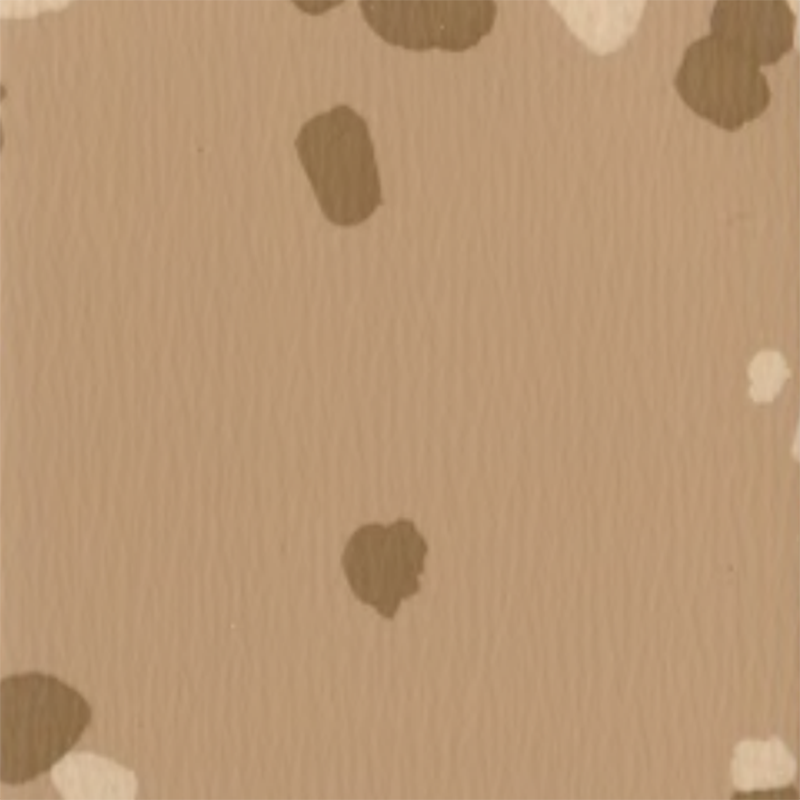 OMAY Anti-Slip Scratch-Resistant Rubber Flooring RollsFor high-traffic safety-critical spaces, this coiled rubber flooring combines wet and dry slip resistance with scratch resistance and long-service-life considerations.View Product →
Honest life cycle costing includes the places where rubber is less forgiving than vinyl. Subfloor flatness matters: rubber is thin and resilient, so ridges and hollows telegraph through, and levelling work adds real cost. Moisture in a slab needs testing and, if necessary, a barrier. Adhesive choice and welding are skilled tasks, so a cheap installer is rarely cheap.
Removal of an old rubber floor is heavier work than stripping vinyl, and point loads from pallet trucks or shelving still need a product with the right density rather than a general-purpose roll. Plan delivery too - rolls are heavy, and a building with no lift access changes the labour figure considerably.
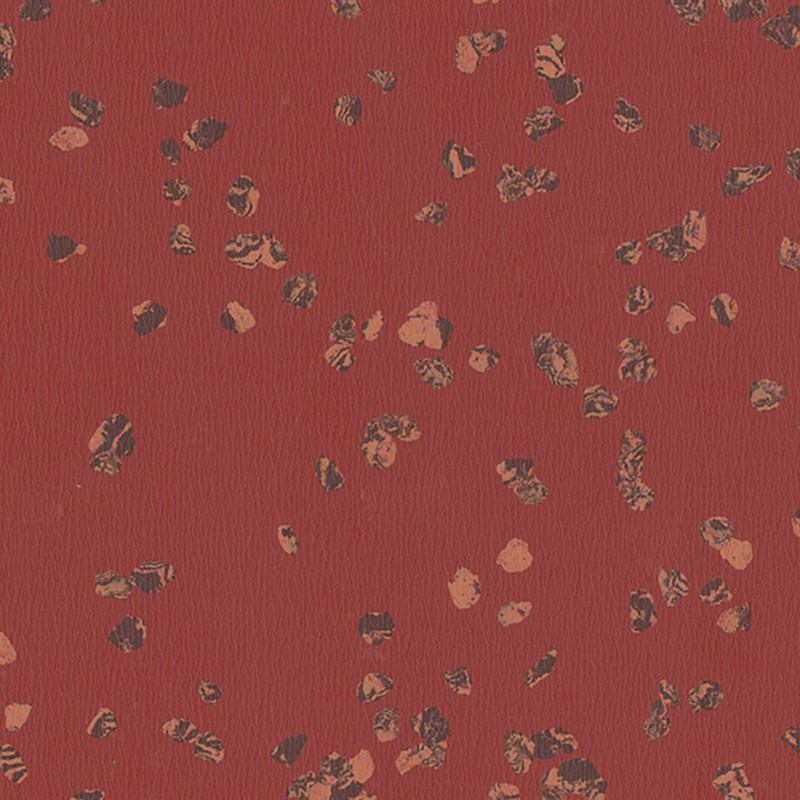 OHILONG High Load-Bearing Rubber Flooring RollsWhere pallet trucks or shelving create point loads, this high load-bearing coiled rubber flooring is designed for warehouses, factories and heavy-duty workspaces.View Product →
Sheet and roll products give you a seamless surface with fewer joints, which suits hospital corridors, laboratories, food areas and anywhere hygiene and waterproofing matter. The trade-off is that a damaged area is harder to patch neatly. Tiles are heavier on joints but friendlier in occupied buildings: a small repair is a small repair, and installation can be phased room by room without closing a whole floor. In a life cycle model, tiles usually show a slightly higher annual cost and slightly lower risk.
 Rubber Tiles for Phased Repairs in Occupied BuildingsWhen a small repair should stay small, rubber tiles support phased room-by-room installation and provide elastic, slip-resistant floor covering.View Product →
Life cycle cost does not make a floor cheap - it makes the comparison honest. Rubber is rarely the lowest bid on installation day and frequently the lowest annual cost across a long service life, particularly in busy, wet or noise-sensitive buildings where maintenance labour is the dominant expense. Between those two facts sits your decision.
We have spent more than three decades making flooring and wall materials, and we have seen enough projects to know that the useful conversation is not about price per square metre but about how a building will actually be used. If you send us your room types, traffic patterns and cleaning routine, we will help you put a realistic model together - no pressure, just the numbers. Get in touch with our team when you are ready.



 English
 русский
 عربى
 Español