

Home / News / Industry News / Apartment Flooring Solutions: A Practical Guide to Choosing the Right Floor
Content
Apartment flooring rarely gets the attention it deserves. In a house, you can choose a floor for one family and one set of habits. In an apartment building, the same floor has to work for a rotating cast of tenants, tolerate furniture dragged across it every couple of years, and still keep the neighbours below on speaking terms with the people above.
We have spent more than three decades manufacturing flooring and wall materials, and most of the apartment questions we receive come down to four things: sound, moisture, wear, and the cost of the next turnover. What follows is a practical walk through the options we see working in real buildings, and where each one earns its place.
Before comparing materials, it helps to be clear about the pressures a floor will face. These are the things that decide whether a floor is still serviceable after five years.
Most apartment flooring now falls into a handful of families. Here is how they behave in practice rather than on a specification sheet.
Sheet vinyl — heterogeneous with its printed wear layer, or homogeneous with colour running through the full thickness — is still the default for large multifamily work. Seams are welded, so water stays on top; the surface is warm and quiet underfoot; and rolls cover a whole studio with very few joints. Look for variants with a sound-absorbing backing where impact noise is the complaint, and a PU coating where cleaning crews use scrubbers. We have used these floors in corridors, clinics and classrooms, and they hold up well where traffic never really stops.
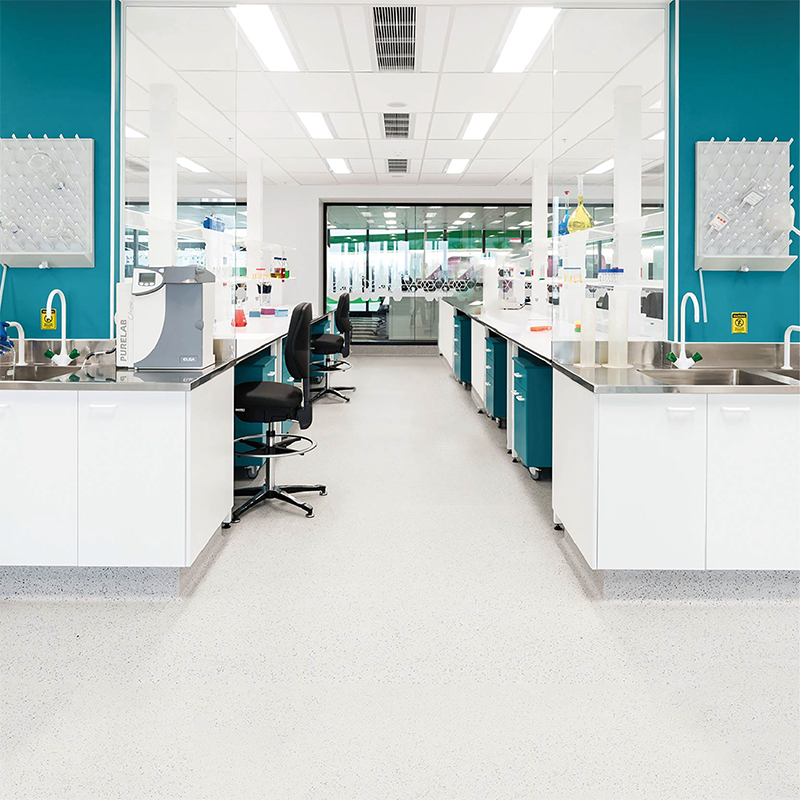 Commercial Heterogeneous PVC Sheet FlooringExplore multi-layer heterogeneous PVC sheet flooring with wear-resistant, printed and backing layers for high-traffic commercial, public and medical interiors.View Product →
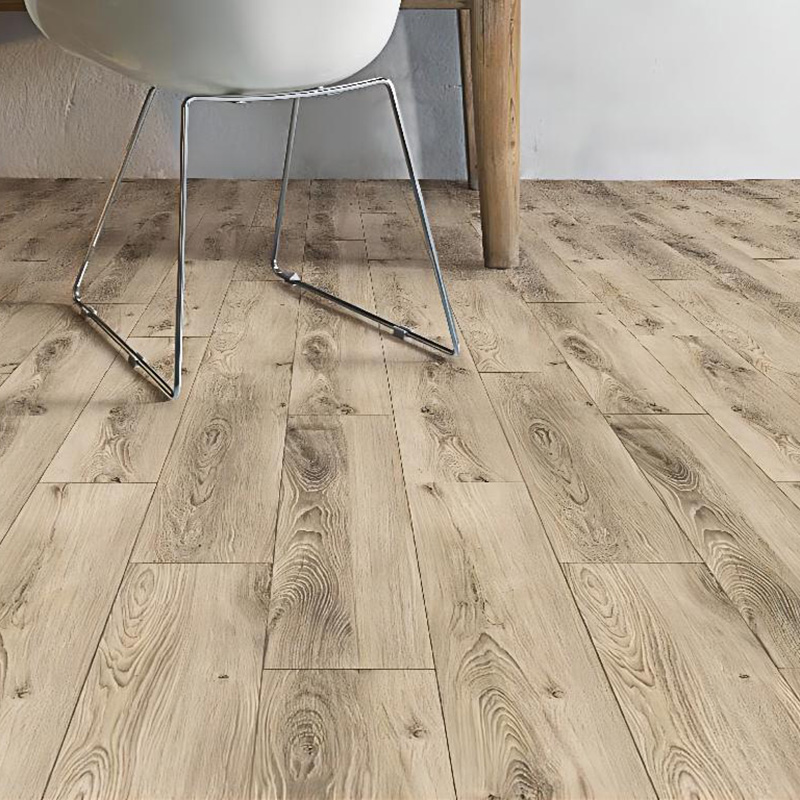
LVT planks and tiles give you the look of timber or stone without the maintenance conversation. The wear layer is genuinely waterproof, so a spill in the kitchen is an inconvenience rather than an emergency, and individual tiles can be swapped when a tenant's chair wins an argument. Wood-grain and stone-texture options have become convincing enough that most visitors cannot tell the difference at a glance. Glue-down installation feels solid and handles temperature swings better than loose lay in buildings with uneven heating.
 Luxury Vinyl Tile for Commercial and Residential FloorsCompare LVT planks and tiles with realistic wood, stone or fabric textures, wear-resistant surfaces and replaceable tiles for busy residential and commercial spaces.View Product →
The rigid core in an SPC lock floor clicks together over a flat subfloor, so you can refurbish a unit in a day without adhesive, dust or long curing times. It brings high dimensional stability and a firm, quiet feel underfoot, which suits owners who need to turn units quickly between tenancies. The trade-off is that the surface must be flat, and standing water left too long will find the joints. It is a strong choice for bedrooms and living areas, less so for bathrooms.
 Stone Plastic Composite Lock FlooringView SPC lock flooring with rigid core, interlocking installation, waterproof construction and wood, stone or carpet visuals for quick residential and commercial refurbishment.View Product →
When the brief mentions acoustics, heavy traffic or impact, rubber deserves a serious look. It absorbs sound, returns to shape after a point load, and stays slip resistant when wet. It is not a budget option, but in gyms, service corridors and ground-floor units it often outlasts everything else on the list.
Carpet tiles are excellent for bedrooms and upper floors where impact noise matters, but they trap dust and stain in dining areas. Ceramic tile is unbeatable in wet rooms and unforgiving everywhere else — cold, hard and noisy. Hardwood and laminate look wonderful and dislike moisture, which is why they rarely survive a decade in a busy rental. None of these is a bad material; they are simply mismatched to some rooms and matched to others.
| Solution | Best suited to | Key strengths | Watch out for |
|---|---|---|---|
| Resilient vinyl sheet | Whole units, corridors, kitchens | Welded seams, quiet, easy to clean | Needs a flat, dry subfloor |
| Luxury vinyl tile | Living areas, kitchens, bedrooms | Waterproof, replaceable tiles, wood looks | Quality varies with wear layer |
| SPC lock floor | Fast unit turns, living areas | No adhesive, stable, quick to install | Joints dislike standing water |
| Rubber flooring | Gyms, stairs, ground floors | Acoustic, elastic, slip resistant | Higher material cost |
| Carpet tile | Bedrooms, upper floors | Impact noise control, warm feel | Stains and dust in dining zones |
| Ceramic tile | Bathrooms, balconies | Waterproof, hard wearing | Cold, hard, heavy underfoot |
| Hardwood or laminate | Owner-occupied apartments | Warm appearance, repairable | Sensitive to moisture and sanding |
Treat wet rooms as a separate project. Welded sheet vinyl or well-fitted tiles with tight joints are the safe choices; laminate and standard hardwood are not. Where the balcony door sees rain and grit, a matte, slip-resistant finish earns its keep.
This is where appearance matters most and where LVT and SPC do their best work. If the building has a strict acoustic requirement, add the underlay the specification calls for rather than relying on the plank alone.
Shared circulation is a maintenance budget line, not a design statement. Homogeneous sheet vinyl, rubber and properly finished stair nosings keep cleaning costs predictable and reduce trip hazards.
Impact sound. Ask what the floor does for the neighbour below, not just for the tenant. Acoustic backings and softer surfaces cost less now than a complaint log later.
Moisture in the slab. Adhesive failures are almost always subfloor problems in disguise. Test the concrete before ordering anything, and allow curing time rather than scheduling installation the day after screeding.
Flatness. Locking floors and thin vinyl both telegraph every bump. A levelling pass is cheaper than a callback.
The cheapest floor is rarely the one with the lowest price per square metre. Add installation, adhesive, levelling and the labour of a second turnover, and the ranking often changes. Sheet vinyl and rubber tend to win on life-cycle cost in shared areas; LVT and SPC win where speed and appearance decide the rent. In all cases, a mat at every entrance and felt pads under furniture do more for the surface than any cleaning product.
We manufacture flooring and wall materials for residential, commercial and institutional projects, and we are happy to talk through a specific building rather than a general brief. If you would like to see how these materials have performed in practice, our commercial project case studies are a good place to start. When you are ready to compare samples and specifications, get in touch with our team and tell us the rooms, the subfloor and the sound requirement — that is usually enough to narrow the list to two or three sensible options.



 English
 русский
 عربى
 Español