



Home / News / Industry News / Acceptable Moisture Content in Concrete for Vinyl Flooring: Complete Guide
Content
A concrete slab can look dry, feel dry, and still hold enough moisture to ruin a vinyl floor after installation. If you are about to install LVT, LVP, or sheet vinyl over concrete, the generally accepted moisture limit is 75% relative humidity or less when measured with ASTM F2170, or a calcium chloride emission rate of 3 lbs or less per 1,000 sq ft per 24 hours with ASTM F1869. Some floating vinyl products are rated as high as 80% to 85% RH, but 75% remains the safer working limit unless the product data sheet explicitly allows more.
The table below summarizes the three benchmarks most installation teams use to judge concrete moisture. None of them can be mixed and matched without reading the product specification for your exact vinyl flooring.
| Testing Method | Typical Acceptance Limit | Best Used For |
|---|---|---|
| ASTM F2170 In-Situ Relative Humidity | 75% RH or less; up to 80% to 85% RH for some approved floating vinyl systems | LVT, LVP, and sheet vinyl installations, especially glue-down floors |
| ASTM F1869 Calcium Chloride Test | 3 lbs or less per 1,000 sq ft per 24 hours | Glue-down vinyl and moisture-sensitive adhesive systems |
| Pin-Type Moisture Meter (%MC) | 3.5% to 4.5% moisture content, indicative only | Quick screening and locating problem areas before a formal test |
Some glue-down products require stricter limits, especially if the adhesive is moisture-sensitive. The numbers above are starting points, not substitutes for the manufacturer's written installation instructions.
Concrete is porous and holds a large amount of water. During mixing, water is necessary for the cement to cure, but much of that water must escape before a floor covering can be installed. Even an older slab can let moisture move upward from the soil underneath. Vinyl flooring is flexible and has low vapor permeability, so moisture that reaches the underside cannot escape easily.
Vinyl planks are often described as waterproof, but that does not mean the entire floor assembly is vapor-proof. The concrete slab is part of the system, and its condition has to be controlled before any vinyl layer is installed.
Visual inspection is not enough. Proper moisture testing is the only reliable way to know whether a slab is acceptable, and the results should be recorded as part of the project file.
This is the most widely accepted method for vinyl flooring. Clean holes are drilled to about 40% of the slab depth, plastic sleeves are inserted, probes are sealed in place, and readings are taken after the sensor has equilibrated. Because this method measures the internal moisture condition of the slab, it gives a better picture of long-term moisture behavior than a surface reading.
A sealed container with pre-weighed calcium chloride is placed on the slab for 60 to 72 hours. The weight gain shows how much moisture is passing through the surface. Results are expressed in pounds per 1,000 sq ft per 24 hours, and a result below 3 lbs is the common pass line for vinyl flooring.
Pin-type and palm meters are fast and useful for scanning large areas, especially for locating wet spots. They measure the surface layer rather than the full slab, so use them as a preliminary tool. Confirm the result with an RH or calcium chloride test before making an acceptance decision.
Floating vinyl floors are clicked or laid over an underlayment and are not bonded to the concrete, so some suppliers allow 80% to 85% RH. This is not the same as allowing a wet slab. Moisture still moves through the concrete and can collect beneath the floor, especially in basements and on-grade slabs.
Rigid-core options, such as SPC lock flooring, are often used for floating installations because the locking profiles stay dimensionally stable. Still, the slab moisture test should be part of the installation record.
 High stability & high strength SPC lock flooring Suppliers, Wholesale Company - Dajulong is High stability & high strength SPC lock flooring Supplier and Company in China, Wholesale High stability & high strength SPC ...View Product →
For glue-down vinyl, 75% RH or less is the target. If the slab is within limit, the adhesive can form a uniform bond. If it is above limit, adhesive failure, blisters, and edge curl become much more likely. A detailed LVT flooring guide can explain the differences between product types, but the project moisture data should always come before the aesthetic choice.
Stop the installation. That is the first rule. Once a vinyl floor is down, trapped moisture is expensive to correct. Create a written record of the readings, the date, and the test methods, then work through the possible solutions.
A floor cannot be installed over wet concrete simply because the vinyl product is called waterproof. The finishing material and the substrate have to work together.
As a flooring manufacturer, we see the best installations when the installer and material supplier work from the same written rules. The concrete slab and the vinyl floor are separate but linked systems. A high-quality floor cannot correct a high-moisture slab.
Our product range includes wood-grain LVT planks for projects where natural timber aesthetics are preferred without the dimensional movement of real wood. These floors still require a substrate that meets the moisture limits shown earlier.
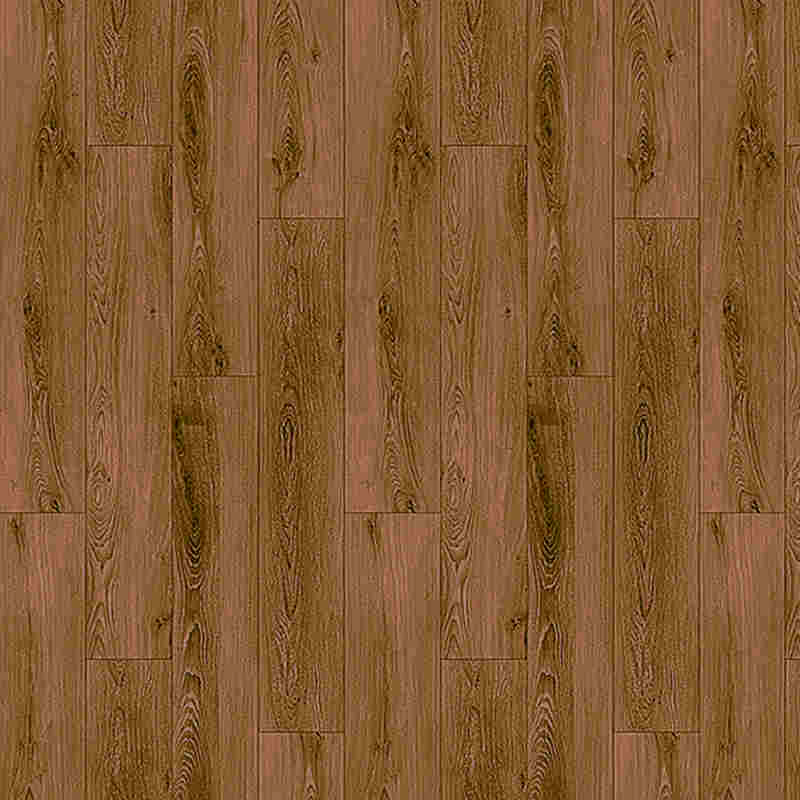 Wood grain touching feel luxury vinyl tiles Suppliers, Wholesale Company - ShangDajulong is Wood grain touching feel luxury vinyl tiles Supplier and Company in China, Wholesale Wood grain touching feel luxury vinyl ti...View Product →
For extra details on how rigid vinyl cores are built and why they matter, see our SPC lock floor construction guide.
Do not let a dry-looking slab be the only evidence. Test with a recognized method, record the results, compare them with the product's written specification, and only then install the vinyl floor. That process saves time, money, and callbacks.





 English
  русский
 عربى
عربى Español
